Immune supplements for kids fill store shelves every fall, and most parents have wondered whether any of them actually work.
Key Takeaways
- Immune supplements for kids are a backup to good habits, not a substitute for them. A balanced diet, enough sleep, daily outdoor activity, and handwashing matter more than any bottle.
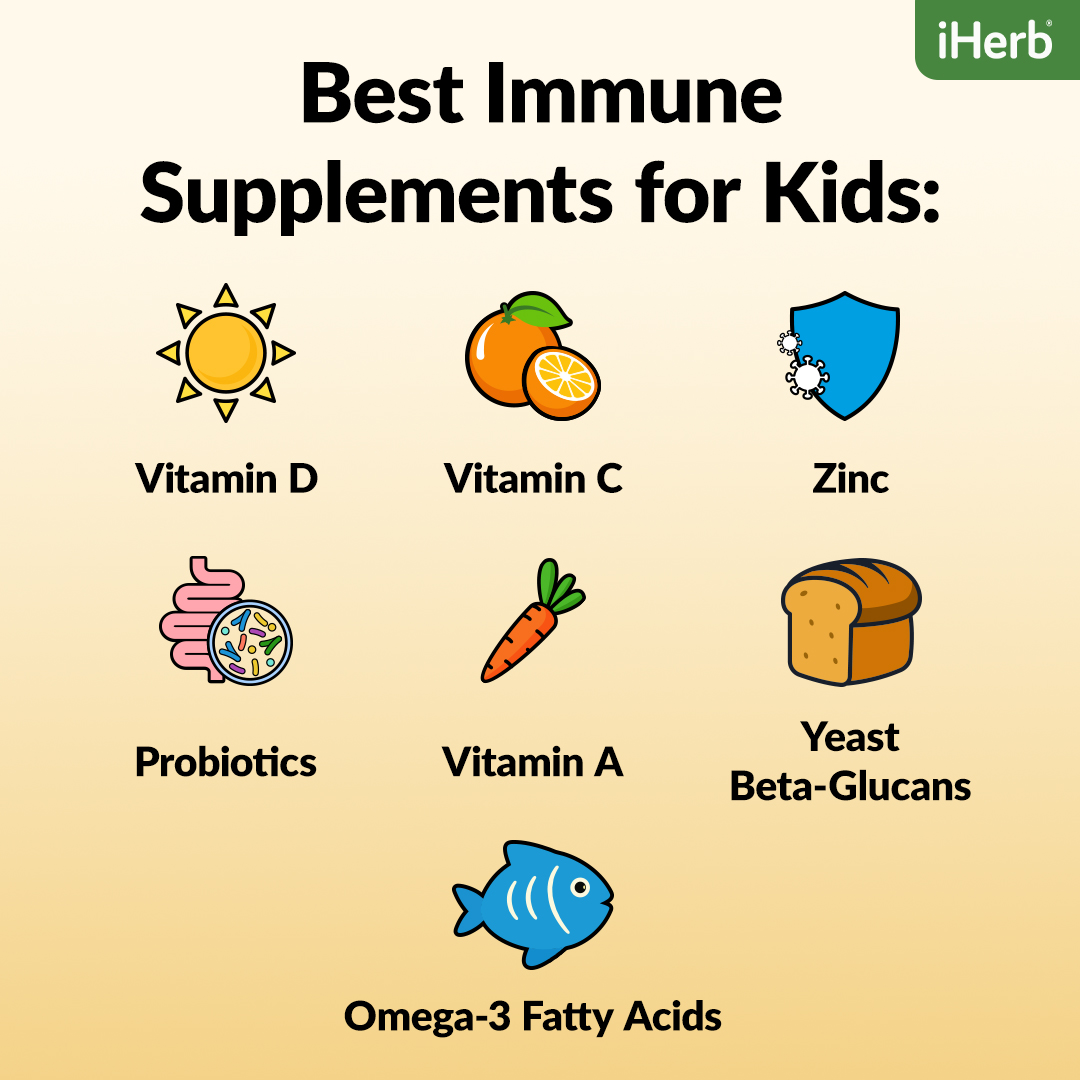
- The most studied options for kids are vitamin D, vitamin C, zinc, and probiotics. Vitamin A, omega-3s, and yeast beta-glucans have supporting evidence, too.
- More is not safer. Fat-soluble vitamins (A and D) and zinc can build up to harmful levels, so dosing to recognized limits matters.
- Many gummy immune supplements carry 2 to 5 grams of added sugar per serving, and elderberry syrups can run higher; that adds up fast against a child's daily sugar budget, even if a single dose is unlikely to meaningfully suppress immunity on its own.
- Vaccination remains a far more effective defense against serious respiratory illness than any supplement, and the two are not competing options; a supplement fills nutritional gaps, a vaccine trains the immune system against a specific threat.
- Always talk to your pediatrician before starting anything new, and choose products formulated and dosed for children.
What Counts as an Immune Supplement for Kids?
Immune supplements for kids are vitamins, minerals, fatty acids, or compounds given to support a child's developing defenses against everyday viruses and bacteria. They aren't medicines, and they don't replace a healthy routine. Think of them as filling gaps: a child who eats few vegetables, gets little winter sun, or is going through a heavy winter season may benefit from targeted support that a balanced plate would normally provide.
Children's immune systems are still maturing. From the classroom to the playground, kids meet a constant stream of new microbes, and their bodies are still learning to recognize and respond to them. Good nutrition gives that system the raw materials it needs to do its job.
A quick note before the list: for a well-nourished child, most of these nutrients are already coming from food, and the measurable benefit of adding a supplement is often small. The evidence is strongest when a child is already low in a nutrient.
Which Immune Supplements for Kids Have Evidence Behind Them?
Which immune supplements for kids have the most evidence is a fair place to start, since not every product on a store shelf earns its claims equally. Here are the seven with the strongest research behind them, ordered roughly by how directly each supports a child's immune function.
1. Vitamin D, the foundation nutrient
Vitamin D does more than build bones; it helps regulate both the innate and adaptive arms of the immune system. Many children run low, especially in winter, in northern latitudes, or with darker skin, because the body makes less of it from limited sun.
In an individual participant meta-analysis of 25 randomized controlled trials covering 11,321 people aged 0 to 95, published in The BMJ, supplementation supported overall immune and respiratory resilience by about 12%, a real but modest effect. The benefit was far larger in a specific subgroup: children and adults who were severely deficient at the start (blood levels under 25 nmol per L) and who took vitamin D daily or weekly rather than in large infrequent doses (Martineau et al., 2017). The dramatic numbers come from correcting a real deficiency with steady dosing, not from topping up a child who already has enough.
On dosing, follow recognized pediatric guidance. The American Academy of Pediatrics and the NIH Office of Dietary Supplements set 400 IU per day for infants under 12 months and 600 IU per day for children and teens aged 1 and up (NIH ODS, 2024). Some integrative practitioners suggest higher amounts for children with low blood levels, but anything approaching the pediatric tolerable upper limits should happen only under a doctor monitoring your child's levels.
2. Vitamin C, the classic seasonal pick
Vitamin C supports the skin and mucous membranes that act as physical barriers, helps white blood cells function, and aids antibody production (Carr and Maggini, 2017). It's water-soluble, so the body doesn't store excess, and the need rises during infection and stress.
What it won't do is prevent colds in an already well-nourished child. A meta-analysis found vitamin C modestly supports a faster return to feeling well by roughly 14% in children, but routine supplementation doesn't stop healthy kids from seasonal challenges in the first place (Hemilä and Chalker, 2023). It's a reasonable shelf staple, not a force field.
3. Zinc, the immune gatekeeper
Zinc is involved in a huge range of immune activities, from white blood cell production to thymus function, and it supports the body's natural cellular defenses (Wessels et al., 2017). When zinc is low, immunity drops noticeably, so correcting a deficiency matters. Some studies suggest zinc lozenges or syrup, started right at the onset of seasonal challenges, may shorten its course (NIH ODS, 2024).
The practical catch with kids is taste and tolerability: zinc lozenges are unpleasant, pose a choking risk for little ones, and can cause nausea on an empty stomach. Stick to age-appropriate forms and doses, and don't exceed the label; too much zinc interferes with copper absorption over time.
4. Probiotics, gut support with immune spillover
A large share of immune activity is anchored in the gut, so the bacteria living there influence how well the system works. Probiotic benefits are strain-specific, with Lactobacillus and Bifidobacterium the most studied for immune effects in children (Jankiewicz et al., 2023). Typical research doses land between 5 and 20 billion CFU per day, and the strongest evidence comes from products using defined strains tested in human trials. Generic billions of cultures marketing tells you little; the specific strain is what matters.
5. Vitamin A, the anti-infective vitamin
Vitamin A keeps the skin and mucous membranes healthy and supports white blood cell function. Supplementation produces clear benefits in children who are deficient, which is common in lower-income regions and less so where food is fortified (Imdad et al., 2022). For a well-fed child in a fortified food country, routine high-dose vitamin A isn't needed and can be harmful in excess, since it's fat-soluble and accumulates. Children develop vitamin A toxicity at lower doses than adults do, which is one reason this nutrient is best left to a pediatrician's judgment.
6. Omega-3 fatty acids, EPA and DHA, cell membrane builders
The long-chain omega-3s EPA and DHA sit in the membranes of immune cells and help regulate inflammation. Preliminary work in children links higher omega-3 intake with more robust respiratory wellness and a healthy immune response (Bodur et al., 2025; Gorczyca et al., 2024). The evidence is early rather than settled, but the safety margin is wide, and the broader developmental benefits are well established.
7. Yeast beta-glucans, targeted white blood cell support
Beta-glucans from baker's yeast (Saccharomyces cerevisiae) bind to receptors on white blood cells and help activate them. A systematic review and meta-analysis found that yeast beta-glucan supplementation can help support upper respiratory health and comfort in healthy people (Zhong et al., 2021). It's the least familiar item on this list, but it has a reasonable evidence base behind it.
Do Kids Really Need an Immune Supplement, or Is Food Enough?
Do kids really need an immune supplement is the question pediatric groups get asked most often, and the honest answer is usually no. The American Academy of Pediatrics and groups like Mayo Clinic Press and Lurie Children's Hospital broadly agree: a healthy child eating a varied diet, playing outside, and sleeping well typically gets what they need from food and daylight alone, without any bottle involved.
The exceptions are specific rather than universal. Breastfed infants need a vitamin D supplement because breast milk alone doesn't supply enough. Picky eaters with genuinely limited diets, kids with a diagnosed deficiency, and children going through an unusually heavy infection season are the groups most likely to see a real benefit. For everyone else, a supplement functions more like an insurance policy than a necessity: it likely won't hurt at the right dose, but it also isn't doing the heavy lifting good habits already do.
Why Do Sugary Gummy Vitamins Undercut the Immune Support They Promise?
Why sugary gummy vitamins are worth a second look comes down to a genuine, if often overstated, tension: many children's immune gummies carry 2 to 5 grams of added sugar per serving, and elderberry syrups can run to 8 to 10 grams per dose, which is comparable to a small piece of candy.
The underlying mechanism is real. A classic study found that ingesting simple sugars measurably reduced neutrophils' ability to engulf bacteria for several hours afterward, with the effect strongest between one and two hours after intake (Sanchez et al., 1973). That study used a 100-gram sugar load in adults, though, which is roughly 20 to 40 times more sugar than a single gummy contains. So it would be an overstatement to say one daily gummy meaningfully suppresses a child's immune response; the acute effect at gummy level doses hasn't been directly tested and likely isn't comparable.
The more solidly established concern is cumulative. The American Heart Association recommends children aged 2 to 18 keep total added sugar under 25 grams a day, and most American kids already exceed that from snacks, drinks, and cereal alone (Vos et al., 2017). A daily immune gummy is rarely the sole problem, but it quietly adds to a sugar budget that's often already full, and choosing a sugar-free chewable, capsule, or liquid form sidesteps the question entirely.
What Do Popular Immune Boosting Claims About Kids Get Wrong?
What popular claims get wrong is usually a matter of overreach rather than outright fabrication. Here are some common misconceptions.
- “Collagen boosts a child's immune system.” But there is no credible evidence behind it; it's marketed mainly for skin and joints in adults.
- “Elderberry prevents colds in kids” overstates thin pediatric data. Adult results are mixed to promising, but a trial in children aged 5 to 12 found no significant benefit, and raw or improperly prepared elderberry is genuinely toxic.
- “Mega dose vitamin C stops colds” doesn't hold up either; routine vitamin C doesn't prevent colds in healthy kids, and at best, it slightly shortens one already underway.
- “More vitamins equal stronger immunity” is probably the most persistent myth on this list, and it's backward. Past the point of correcting an actual deficiency, extra doesn't help, and fat-soluble vitamins can reach toxic levels well before that point.
- “Immune gummies work like medicine” is the last common misread. They support nutrition, they don't treat or cure an active infection, and their candy-like format carries a real overdose risk if a child gets into the bottle unsupervised.
The honest takeaway across all of these: supplements fill genuine nutritional gaps. They don't supercharge a healthy child's immune system, and any product promising that is selling a story rather than reporting a finding.
How Do These Supplements Compare by Age?
How these supplements compare by age matters because a dose that's protective for a teenager can be well above the safety ceiling for a toddler. The figures below use recognized public health references and show the recommended daily amount (RDA) alongside the tolerable upper limit (UL), the safety ceiling, not a prescription to give your child a specific dose.
Vitamin D
- Under 1 year: RDA 400 IU; upper limit 1,000 to 1,500 IU.
- Ages 1 to 3: RDA 600 IU; upper limit 2,500 IU.
- Ages 4 to 8: RDA 600 IU; upper limit 3,000 IU.
- Ages 9 to 18: RDA 600 IU; upper limit 4,000 IU.
Vitamin C
- Ages 1 to 3: RDA 15 mg; upper limit 400 mg.
- Ages 4 to 8: RDA 25 mg; upper limit 650 mg.
- Ages 9 to 13: RDA 45 mg; upper limit 1,200 mg.
- Ages 14 to 18: RDA 65 to 75 mg; upper limit 1,800 mg.
Zinc
- Ages 1 to 3: RDA 3 mg; upper limit 7 mg.
- Ages 4 to 8: RDA 5 mg; upper limit 12 mg.
- Ages 9 to 13: RDA 8 mg; upper limit 23 mg.
- Ages 14 to 18: RDA 9 to 11 mg; upper limit 34 mg.
These are reference ranges, not dosing instructions. Confirm any supplement plan with a pediatrician, and add up what's in every product your child takes so the combined total stays within safe limits.
Which Kids Benefit Most From an Immune Supplement?
Which kids actually benefit breaks down into a fairly short, specific list rather than applying to every child. Picky eaters with genuinely limited diet variety, children with a diagnosed deficiency, kids with limited sun exposure heading into winter, and those going through an unusually heavy infection season are the groups most likely to see a measurable difference. A child who eats a varied diet, plays outside, and sleeps well is probably already getting what they need from food and daylight, and adding a supplement on top is unlikely to move the needle much further.
How Should You Give Immune Supplements to a Child?
How you give immune supplements to a child comes down to form, timing, and consistency. Younger kids do best with drops, liquids, or gummies; older children can manage chewables or capsules. Fat-soluble nutrients (vitamins A and D, omega-3s) are absorbed better when taken with a meal that contains some fat. Zinc is gentler on the stomach with food. Probiotics are generally fine any time, though some families prefer them with breakfast for routine.
Consistency beats dosage size, especially for vitamin D, where the research favored daily or weekly intake over occasional large doses. Keep all supplements out of reach: kid-friendly gummies are easy to overconsume, and overdoses of fat-soluble vitamins or iron-containing products are a real poison control risk.
What Are the Warning Signs of Vitamin and Mineral Toxicity in Children?
⚠️ IMPORTANT: Watch for Signs of Supplement Toxicity
Because children can reach harmful levels at lower doses than adults, watch for these red flags. If you suspect an overdose, stop the supplement immediately and contact your pediatrician or Poison Control.
What the warning signs look like differs by nutrient, and because children can reach harmful levels at lower doses than adults, it pays to know them.
- Vitamin A toxicity shows up as nausea, vomiting, loss of appetite, headache, irritability or drowsiness, and, over time, dry or peeling skin and hair loss (Merck Manual, 2024).
- Vitamin D toxicity brings nausea, vomiting, constipation, excessive thirst, frequent urination, weakness, and confusion or lethargy, all linked to a buildup of calcium (Cleveland Clinic, 2025).
- Zinc toxicity causes nausea, vomiting, stomach pain, and, with chronic excess, copper deficiency.
- Across any supplement, unexplained stomach upset, rash, or behavioral changes shortly after starting it are worth a call to the pediatrician.
This is exactly why label doses and the upper limits above matter. Natural doesn't mean you can't give too much.
Why Does Lifestyle Beat Any Supplement?
Why lifestyle wins comes down to scale: the immune system works like an orchestra, and a supplement is just one instrument. Three habits do more heavy lifting than anything in a bottle.
Sleep is when the immune system does much of its maintenance, and the targets are specific. The American Academy of Sleep Medicine, endorsed by the AAP, recommends toddlers aged 1 to 2 get 11 to 14 hours per 24 hours, including naps, preschoolers aged 3 to 5 get 10 to 13 hours, and school-age children aged 6 to 12 get 9 to 12 hours (AASM, 2016). Regularly falling short is linked to more infections and worse attention and mood.
Outdoor activity supports healthy immune cell circulation, and outdoor play adds natural light exposure that helps maintain vitamin D; aim for active play most days. Diet and hygiene round it out: a varied diet rich in fruits and vegetables supplies most of the nutrients on this list naturally, and regular handwashing remains one of the simplest, most effective ways to cut down on the infections kids pass around. If these foundations aren't in place, no supplement will compensate.
Are Immune Supplements Safe for Kids?
Generally, yes, when dosed correctly for age, but natural doesn't mean risk-free. Fat-soluble vitamins (A and D) accumulate and can reach toxic levels. Zinc in excess depletes copper. Herbal products like elderberry aren't FDA regulated, so potency varies between brands, and only properly prepared extracts of the cooked fruit are safe; raw or improperly processed elderberry contains cyanide-forming compounds and can cause poisoning. Always choose children's products from reputable brands, follow the label, and check with your pediatrician, particularly if your child takes any medication.
What About Elderberry for Seasonal Challenges?
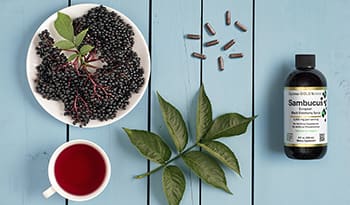
What elderberry (Sambucus nigra) has going for it is popularity, and some adult studies suggest it may shorten symptoms if started early (Wieland et al., 2021). The pediatric evidence is weaker, though: a trial in children aged 5 to 12 with respiratory symptoms found no significant benefit. Combined with the regulation and safety caveats above, that makes elderberry a discuss with your pediatrician option rather than a default choice. Prevention remains the better bet.
What Medication and Health Condition Interactions Should Parents Know About?
What interactions matter most depends on which supplement and which condition, but a few are worth knowing before combining anything with a prescription or an existing diagnosis.
- Vitamin D and anticonvulsants: medications like phenobarbital and phenytoin, used for seizure disorders, can speed up the breakdown of vitamin D in the body, so children on long-term anticonvulsant therapy may need their vitamin D status checked more closely by their doctor.
- Zinc and antibiotics: zinc can bind to certain antibiotics, including tetracyclines and fluoroquinolones, in the gut and reduce absorption of both; spacing the two doses by a couple of hours avoids the interaction.
- Omega-3s and anticoagulants or antiplatelets: at higher doses, omega-3 fatty acids have a mild blood-thinning effect, which matters if a child is on an anticoagulant or antiplatelet medication or is scheduled for surgery; mention omega-3 use to the prescribing doctor.
- Probiotics and immune-suppressing conditions: a systematic review identified 49 case reports of invasive infections linked to probiotic use in children between 1995 and 2021, with the large majority in infants under 2 and in children who were immunocompromised, had a central line, or had short bowel syndrome (D'Agostin et al., 2021). Probiotics are considered safe for otherwise healthy children, but this history is a real reason to check with a pediatrician first if your child is immunocompromised, was born prematurely, or has a serious underlying condition.
- GI conditions generally: children with inflammatory bowel disease, a recent bowel surgery, or a central venous catheter fall into the higher risk group above and warrant medical guidance before starting any probiotic.
- Respiratory conditions: There's no known specific interaction between the supplements on this list and asthma medications, but any new supplement in a child with a chronic respiratory condition is worth mentioning at the next checkup simply to keep the full picture current.
When Should You Stop a Supplement or See a Doctor Instead?
When to stop and call the pediatrician: if your child develops stomach upset, rash, or any unusual symptoms after starting a supplement, or if they're starting a new medication. See a doctor rather than reaching for a supplement if your child has frequent or severe infections, isn't growing as expected, or seems persistently run down. Recurrent illness can signal something a multivitamin won't fix, and it deserves a real evaluation rather than another bottle.
How Does a Child's Immune System Actually Work?
How the immune system works comes down to two layers. The innate system is the fast, nonspecific first line: skin, stomach acid, and rapid response cells that attack anything foreign. The adaptive system is slower but more precise; it builds specialized cells and antibodies against specific germs and forms a memory, so the next encounter with the same microbe is dealt with faster. Supplements support the raw materials and signaling these systems rely on. They don't replace the system itself.
Final Thoughts on Immune Supplements for Kids
The best immune supplements for kids are a backup to good habits, not a substitute. Vitamin D, vitamin C, zinc, and probiotics have the strongest support; vitamin A, omega-3s, and yeast beta-glucans round out the list with reasonable evidence. Match the dose to your child's age, keep expectations realistic, watch for the warning signs of too much, and check with your pediatrician before starting. When you're ready to choose, you can browse iHerb's range of immune supplements for kids to compare brands, forms, and tested formulations.
FAQ
Do gummy vitamins lose potency faster than pills or capsules?
Yes, generally. Gummies are more sensitive to heat, humidity, and light than hard tablets or capsules, and their vitamin content, especially vitamin C and some B vitamins, can degrade noticeably before the printed expiration date if stored in a warm bathroom cabinet. Keep gummy vitamins in a cool, dry place and don't assume a bottle that's been open for months still delivers the full labeled dose.
Can a child be allergic to a specific probiotic strain?
True allergic reactions to probiotic bacteria themselves are rare, but reactions to the carrier ingredients in a probiotic product, such as dairy-derived fillers, soy, or gelatin, are more common and can look like an allergic response. If your child reacts to a probiotic, check the full ingredient list before assuming the bacteria strain itself is the cause.
Is it safe to split or crush a children's vitamin tablet to share between siblings?
This isn't recommended. Splitting a tablet dosed for an 8-year-old to approximate a smaller dose for a 4-year-old risks an inaccurate, unpredictable amount per piece, especially for fat-soluble vitamins, where precision matters. Use a product formulated and labeled for your younger child's specific age range instead.
Can taking an immune supplement interfere with how well a vaccine works?
There's no established interaction where a standard dose of vitamin D, vitamin C, zinc, or a probiotic blunts vaccine effectiveness. Severe, uncorrected nutrient deficiencies can weaken overall immune response, but a typical children's supplement at label dose is not a known cause for concern around vaccine timing.
What should I do if my child mixes up their supplement with an older sibling's higher-dose vitamin?
Check the label for the sibling's dose and your younger child's weight, then call Poison Control or your pediatrician right away rather than waiting to see if symptoms appear, particularly for anything containing iron or a fat-soluble vitamin. Store children's supplements separately by age group to prevent this from happening in the first place.
Is a children's formula meaningfully different from just giving a smaller adult dose?
Yes. Children's formulas are dosed for pediatric body weight and metabolism, not simply diluted from an adult product, and they're typically tested and labeled for age-appropriate ranges that account for a child's smaller tolerable upper limits. Giving a fraction of an adult supplement instead risks under- or overdosing without a reliable way to tell which.
Can food allergies limit which immune supplement forms are safe for my child?
Yes. Gummies commonly contain gelatin (an animal product) or pectin plus added flavors and dyes; some contain soy or tree-nut-derived ingredients. Always check the full ingredient panel against your child's known allergies rather than assuming a children's product is automatically free of common allergens.
Should a breastfeeding mother take extra immune supplements to pass benefits to her nursing infant?
For vitamin D specifically, no; breast milk doesn't reliably transfer enough vitamin D regardless of how much the mother takes, which is why breastfed infants need their own direct supplement starting shortly after birth. For most other nutrients on this list, a breastfeeding mother meeting her own normal recommended intake is generally sufficient, and mega dosing on her own end isn't shown to meaningfully boost what reaches the infant.
Does starting daycare or school change what immune support a child needs?
It can shift the calculus, since kids in group care settings are exposed to more novel viruses and tend to get sick more often in their first year or two of attendance. This is a reason some pediatricians support closer attention to foundational habits (sleep, handwashing, diet) during that transition, but it isn't, by itself, a reason to add a new supplement without an actual deficiency.
Can a child become dependent on taking a daily immune gummy, expecting to get sick without it?
There's no physiological dependency involved; skipping a vitamin C or zinc gummy doesn't create a rebound effect or increased susceptibility on its own. Any anxiety a child or parent feels about missing a dose is a behavioral pattern worth being aware of, not a pharmacological one, and it's a reasonable thing to mention to a pediatrician if it's driving daily stress around the routine.
Do any of these immune supplements also help with a child's focus or attention?
Not by design, and parents sometimes conflate the two searches. Real caregiver discussions on attention-focused forums show families asking about high-dose omega-3 fatty acids specifically for attention symptoms, separate from immune support, and pediatric guidance consistently points to getting a child evaluated for an actual deficiency before adding any supplement, rather than assuming a general immune product will help focus. Treat these as two different questions with two different answers.
References:
- American Academy of Sleep Medicine. (2016). Recommended amount of sleep for pediatric populations: A consensus statement. Journal of Clinical Sleep Medicine, 12(6), 785 to 786.
- Bodur, M., Yilmaz, B., Ağagündüz, D., and Ozogul, Y. (2025). Immunomodulatory effects of omega-3 fatty acids: Mechanistic insights and health implications. Molecular Nutrition and Food Research, 69(10), e202400752.
- Carr, A. C., and Maggini, S. (2017). Vitamin C and immune function. Nutrients, 9(11), 1211.
- Cleveland Clinic. (2025). Vitamin D toxicity (hypervitaminosis D). https://my.clevelandclinic.org/health/diseases/24750-vitamin-d-toxicity-hypervitaminosis-d
- D'Agostin, M., Squillaci, D., Lazzerini, M., Barbi, E., Wijers, L., and Da Lozzo, P. (2021). Invasive infections associated with the use of probiotics in children: A systematic review. Children, 8(10), 924.
- Gorczyca, D., Szeremeta, K., Paściak, M., et al. (2024). Association of serum polyunsaturated fatty acids (PUFAs) and children's dietary inflammatory index with recurrent respiratory infections in children: A cross sectional study. Nutrients, 17(1), 153.
- Hemilä, H., and Chalker, E. (2023). Vitamin C reduces the severity of common colds: A meta analysis. BMC Public Health, 23(1), 2468.
- Imdad, A., Mayo Wilson, E., Haykal, M. R., et al. (2022). Vitamin A supplementation for preventing morbidity and mortality in children from six months to five years of age. Cochrane Database of Systematic Reviews, 3(3), CD008524.
- Jankiewicz, M., Łukasik, J., Kotowska, M., et al. (2023). Strain specificity of probiotics in pediatrics: A rapid review of the clinical evidence. Journal of Pediatric Gastroenterology and Nutrition, 76(2), 227 to 231.
- Martineau, A. R., Jolliffe, D. A., Hooper, R. L., et al. (2017). Vitamin D supplementation to prevent acute respiratory tract infections: Systematic review and meta analysis of individual participant data. BMJ, 356, i6583.
- Merck Manual Professional Edition. (2024). Vitamin A toxicity. https://www.merckmanuals.com/professional/nutritional-disorders/vitamin-deficiency-dependency-and-toxicity/vitamin-a-toxicity
- National Institutes of Health, Office of Dietary Supplements. (2024). Vitamin D: Fact sheet for health professionals. https://ods.od.nih.gov/factsheets/VitaminD-HealthProfessional/
- National Institutes of Health, Office of Dietary Supplements. (2024). Dietary supplements for immune function and infectious diseases. https://ods.od.nih.gov/factsheets/ImmuneFunction-Consumer/
- Sanchez, A., Reeser, J. L., Lau, H. S., et al. (1973). Role of sugars in human neutrophilic phagocytosis. American Journal of Clinical Nutrition, 26(11), 1180 to 1184.
- Vos, M. B., Kaar, J. L., Welsh, J. A., et al. (2017). Added sugars and cardiovascular disease risk in children: A scientific statement from the American Heart Association. Circulation, 135(19), e1017 to e1034.
- Wessels, I., Maywald, M., and Rink, L. (2017). Zinc as a gatekeeper of immune function. Nutrients, 9(12), 1286.
- Wieland, L. S., Piechotta, V., Feinberg, T., et al. (2021). Elderberry for prevention and treatment of viral respiratory illnesses: A systematic review. BMC Complementary Medicine and Therapies, 21(1), 112.
- Zhong, K., Liu, Z., Lu, Y., and Xu, X. (2021). Effects of yeast beta glucans for the prevention and treatment of upper respiratory tract infection in healthy subjects: A systematic review and meta-analysis. European Journal of Nutrition, 60(8), 4175 to 4187.
DISCLAIMER:
These statements have not been approved by the Food and Drug Administration. These products are not intended to diagnose, treat, cure, or prevent disease.


























































 Table of Contents